America's Pharmacy Desert Problem: What Retail Closures Mean for Your Prescriptions and Where Patients Go Next
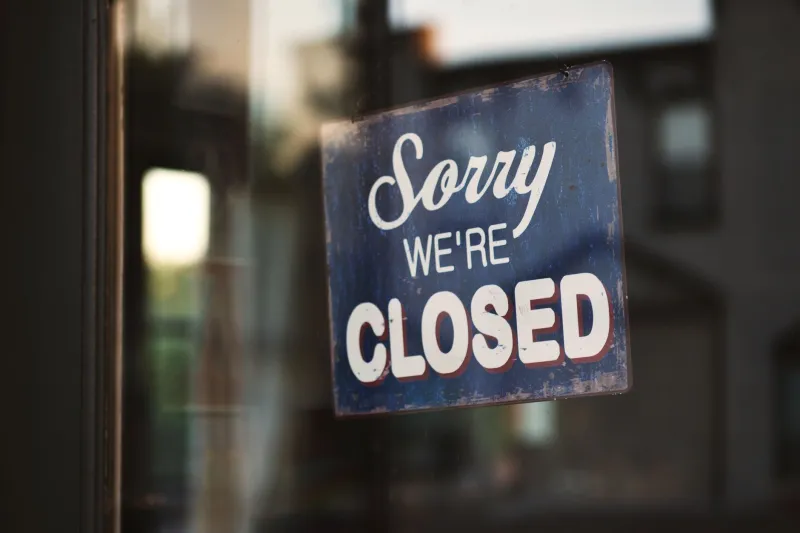
For decades, the neighborhood pharmacy was as reliable a fixture of American life as the post office or the grocery store. You knew the pharmacist by name. They knew your medications. When something changed with your prescriptions, there was a face across the counter to help you sort it out.
That familiarity is becoming harder to find. Major retail chains have announced thousands of store closures over the past several years. Independent pharmacies—already operating on thin margins—have been shuttering at an accelerating pace. Rural communities that once had a single local pharmacy are now classified as pharmacy deserts, defined by researchers as areas where residents must travel more than ten miles to reach a dispensing location. Even suburban neighborhoods that once supported two or three competing pharmacies are being consolidated down to one, or none.
This is not a temporary disruption. It is a structural transformation of how prescription medications reach American patients—and the consequences extend well beyond inconvenience.
Why Retail Pharmacies Are Closing
The forces behind pharmacy closures are financial, logistical, and systemic.
At the core of the problem is reimbursement. Pharmacy benefit managers, or PBMs, serve as intermediaries between insurance companies and pharmacies, negotiating the rates at which pharmacies are paid for dispensing medications. Over the past decade, those reimbursement rates have declined sharply—sometimes to the point where pharmacies are paid less for a prescription than it costs them to fill it. Independent pharmacies, which lack the negotiating leverage of national chains, are particularly vulnerable. Many have simply concluded that continued operation is not financially viable.
Large retail chains face a different but related problem. Their pharmacy departments exist inside stores that carry groceries, cosmetics, and general merchandise. As those broader retail operations have struggled against e-commerce competition, the entire store model has come under pressure. Closing pharmacy departments becomes part of a wider cost-reduction strategy rather than a decision made on pharmaceutical grounds alone.
Labor shortages have compounded these pressures. Pharmacist and pharmacy technician shortages, which intensified during and after the COVID-19 pandemic, have made it difficult for many locations to maintain adequate staffing. Some stores have reduced hours dramatically; others have closed entirely rather than operate with insufficient personnel.
The result is a paradox: at a time when Americans are taking more prescription medications than ever before—managing chronic conditions, aging populations, and complex multi-drug regimens—the physical infrastructure for dispensing those medications is contracting.
What Patients Actually Lose When a Local Pharmacy Closes
The most immediate consequence is logistical. Patients who relied on a nearby location for same-day prescription access suddenly face longer drives, longer waits, or both. For older adults, individuals without reliable transportation, or those managing acute conditions that require prompt access to medication, this is not a minor inconvenience—it is a genuine barrier to care.
But the loss goes deeper than geography. Long-tenured community pharmacists often maintain detailed knowledge of their patients' medication histories, allergies, and sensitivities that exists nowhere else in documented form. When a pharmacy closes, that institutional knowledge does not transfer automatically. Records may be forwarded to another location, but the relationship—and the contextual understanding that comes with it—does not.
Patients who are transferred to a new pharmacy must effectively start over. They may be unaware of the full scope of their own medication history, particularly if they have been filling prescriptions at the same location for many years without maintaining personal records. This creates gaps that can affect safety, particularly for individuals on multiple medications where interaction risks must be actively monitored.
There is also the matter of continuity for specialty medications and compound prescriptions. Not every pharmacy can fill every prescription. Patients who require compounded formulations, less common generics, or specialty biologics may find that their new pharmacy simply does not carry what they need.
The Shift Toward Mail-Order and Online Pharmacy Services
The decline of brick-and-mortar pharmacy locations has accelerated a trend that was already underway: the migration of prescription fulfillment to mail-order and online platforms.
For many patients, this shift began as an insurance-driven decision. Most major health plans now offer lower copays for prescriptions filled through their preferred mail-order pharmacy, particularly for maintenance medications taken on a long-term basis. The financial incentive was enough to move a significant portion of routine prescription volume away from retail counters even before closures became widespread.
As retail locations have closed, the practical case for online pharmacy services has strengthened considerably. An online pharmacy is not subject to the same geographic constraints, staffing pressures, or retail overhead that have made physical locations economically precarious. A patient in a rural county that has lost its only local pharmacy can access the same breadth of medications through a licensed online pharmacy as a patient living a block from a major chain.
Services like LTE Pharmacy are structured specifically to address the access and continuity concerns that retail closures create. Prescriptions are filled by licensed pharmacists, delivered directly to the patient's home, and managed through a centralized record system that travels with the patient regardless of where they live or how often they move. For patients who have experienced the disruption of a pharmacy closure, this kind of portability represents a meaningful advantage.
Protecting Your Medication Access Before a Closure Affects You
The most practical response to the ongoing consolidation of retail pharmacy is preparation rather than reaction.
First, maintain your own medication records. Do not rely exclusively on your pharmacy's system to preserve your history. Keep a current list of all prescriptions, dosages, prescribing physicians, and fill dates. If your pharmacy closes, this documentation will be invaluable when establishing care at a new location.
Second, ask your prescribers about 90-day supply options for maintenance medications. Longer supply intervals reduce your dependence on any single dispensing location and provide a buffer if a closure requires you to transition to a new pharmacy.
Third, evaluate whether an online pharmacy service is appropriate for your needs. For patients managing chronic conditions with stable, long-term prescriptions, the combination of home delivery, centralized records, and consistent pharmacist access that online services provide may offer more reliability than a retail location operating under financial strain.
Finally, ensure that any pharmacy you use—physical or online—is properly licensed in your state and verified through the National Association of Boards of Pharmacy. The same scrutiny you would apply to a new healthcare provider should apply to any pharmacy handling your prescriptions.
A Changing Landscape With Enduring Stakes
The closure of neighborhood pharmacies reflects broader economic pressures that no single policy or patient choice will reverse in the short term. The consolidation of retail pharmacy is a structural shift, and patients who wait for the landscape to return to what it once was may find themselves caught without adequate access when they need it most.
What patients can control is their own preparedness—their records, their supply, and their choice of pharmacy partner. Online pharmacy services have matured significantly as a category, offering licensed, regulated, and genuinely patient-centered care that does not require a physical storefront to deliver. For the growing number of Americans navigating a pharmacy desert, that evolution may represent not just a convenience, but a necessity.