What Your Medicine Cabinet Is Really Costing You: A Room-by-Room Audit That Could Save You Hundreds
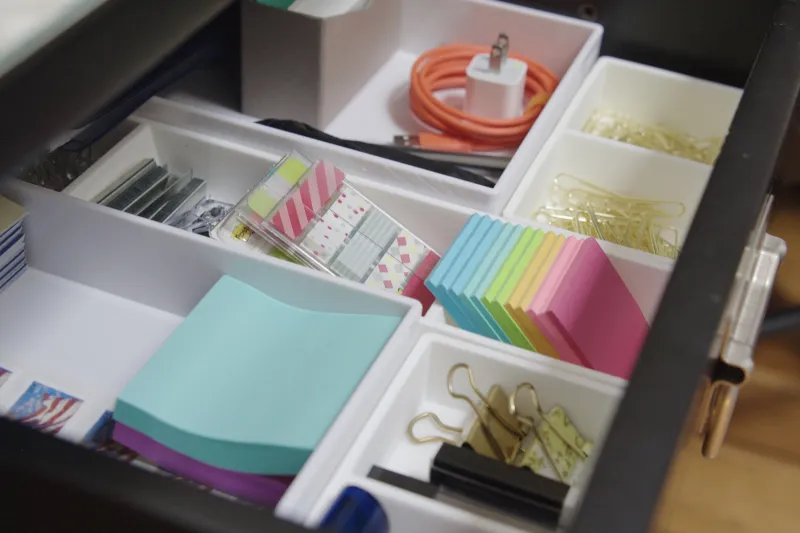
Photo: organized home medicine cabinet with prescription bottles and medication list, via www.simplyorganized.me
The Mess You Cannot Afford to Ignore
Most Americans give little thought to where their medications live once they arrive home. A bottle migrates to the bathroom counter. A blister pack ends up in a kitchen junk drawer. An older prescription gets pushed to the back of a cabinet shelf and forgotten entirely. This scattered approach feels harmless — until the financial and clinical consequences accumulate quietly into a problem that is genuinely difficult to untangle.
Research consistently shows that medication non-adherence costs the United States healthcare system hundreds of billions of dollars annually. A significant portion of that burden originates not from cost barriers or complex regimens, but from something far more manageable: patients simply do not know what they have, where it is, or whether it is still safe to take. If your home storage system contributes to that pattern, you are likely spending more than you realize — and putting your health at greater risk than you understand.
The good news is that a single, methodical audit of your home medications can reverse most of that damage. Here is how to conduct one, what to look for, and how to build a lasting system around your prescription delivery schedule.
Why Disorganization Has a Dollar Amount
Before walking through your home, it helps to understand precisely how poor medication organization translates into financial loss.
Duplicate purchases are among the most common consequences. When you cannot locate a medication, the instinct is to refill it or buy an over-the-counter equivalent. If the original supply later surfaces, you have paid twice. For patients managing chronic conditions with multiple prescriptions, this can happen several times a year across different medications.
Expired medication waste compounds the problem. Prescriptions filled but forgotten do not simply disappear — they expire, rendering their remaining doses unusable. The cost of those wasted pills is rarely recovered, and the refill cycle begins again at full price.
Missed refills create a third category of loss. When medication is stored inconsistently, it becomes genuinely difficult to track how much remains. Patients who run out unexpectedly may face urgent care visits, emergency pharmacy fees, or gaps in treatment that require additional clinical intervention to correct.
Drug interaction risks represent a non-financial but equally serious consequence. Fragmented storage makes it harder to maintain an accurate picture of everything you are currently taking. Supplements, over-the-counter products, and older prescriptions can interact dangerously with new medications — particularly when no single, organized list exists to guide that review.
The Room-by-Room Inventory Process
An effective audit requires moving through your home deliberately, not just glancing at one cabinet. Medications have a tendency to accumulate wherever they were last used, which means they can be found in nearly every room.
Start with the bathroom. Despite being the most common storage location, the bathroom is actually one of the least suitable environments for most medications. Heat and humidity degrade many formulations over time. Gather everything stored here — prescriptions, vitamins, topical creams, and any over-the-counter products — and set them aside for evaluation.
Move to the kitchen. Check drawers, countertops, and any cabinet shelves where medications may have been placed near meals or water. Medications stored near stoves or dishwashers are subject to the same heat and moisture concerns as bathroom storage.
Check nightstands and bedroom areas. Medications taken at bedtime or first thing in the morning often migrate to nightstands and then stay there indefinitely. These areas frequently contain older prescriptions that were never finished.
Do not overlook bags, vehicles, and travel kits. Purses, backpacks, glove compartments, and travel toiletry bags are common repositories for forgotten medications, many of which have been exposed to temperature extremes.
Once everything is gathered in a single location, work through the following evaluation for each item:
- Check the expiration date. Any medication past its printed date should be disposed of properly. The FDA recommends drug take-back programs as the preferred disposal method, with specific flushing guidelines for certain controlled substances.
- Confirm the prescription is still active and appropriate. Conditions change, dosages are adjusted, and prescribers discontinue medications for clinical reasons. An old prescription that no longer reflects your current regimen has no place in your active supply.
- Note the quantity remaining. Record what you have so you can calibrate your next refill request accurately.
- Identify duplicates. If you find two bottles of the same medication, consolidate and document why the duplication occurred to prevent it from happening again.
Building a System That Holds
An audit is only valuable if it produces a structure that you can maintain. The following framework is designed to work specifically with a home delivery model, where refills arrive on a schedule rather than being picked up reactively.
Designate a single, appropriate storage location. A cool, dry place away from light and moisture — such as a bedroom closet shelf or a dedicated drawer in a low-humidity area of the home — is preferable to the bathroom or kitchen. Consistency matters more than convenience.
Create a written or digital medication list. Document every medication you are currently taking, including the prescriber, the dosage, the frequency, and the approximate quantity on hand. Update this list each time a new delivery arrives or a prescription changes. This document also serves as a critical reference during medical appointments and emergency situations.
Establish a refill rhythm tied to your delivery schedule. One of the primary advantages of receiving prescriptions by mail is the predictability it offers. Review your medication list at regular intervals — every 30 days is a reasonable baseline — and initiate refills before your supply reaches a critical low. Most online pharmacies, including LTE Pharmacy, provide tools to track refill timing and set reminders that align with your delivery windows.
Conduct a brief quarterly review. Rather than waiting for disorganization to accumulate again, set a recurring reminder every three months to check expiration dates, verify that your list reflects any prescription changes, and dispose of anything that is no longer needed.
The Audit as a Starting Point, Not a One-Time Event
A thorough home medication audit is not a project you complete once and forget. It is the foundation of a management practice — one that keeps your prescriptions accurate, your costs predictable, and your safety protected. Patients who maintain organized, current medication records are better positioned to catch dangerous interactions, communicate clearly with their care team, and avoid the wasteful spending that comes from reactive, disorganized refill behavior.
If you are managing multiple prescriptions across different conditions, the organizational complexity only increases over time. A structured system, supported by a reliable delivery pharmacy that maintains your complete medication history, is one of the most practical investments you can make in your long-term health management.
At LTE Pharmacy, your prescription history is centralized, your refill schedule is trackable, and your pharmacist is available to help you identify gaps or redundancies in your current regimen. The audit starts at home — but the support system that keeps it working starts here.